GAHP AR Plus
120,000 Btu/h Heating and 5 Ton Cooling Reversible Gas Absorption Air-to-Water Heat Pump
Top energy efficiency gas heating and cooling.


Benefits
- Utility incentives can lower upfront costs.
Rebate amounts depend on the location, customer type, and system design.
British Columbia — FortisBC can cover up to 75% of project costs, with a maximum rebate of CAD 200,000, for qualifying commercial, multifamily, and institutional buildings.
Colorado — The 2026 Black Hills Energy residential program lists $2,390 for qualifying water-to-air gas absorption heat pump systems and $3,490 for qualifying systems with gas furnace backup. The utility can confirm which category applies to the proposed installation.
Illinois — Under the 2026 Nicor Gas Custom Incentive Program, qualifying business and public-sector gas heat pump projects may receive $4 per annual therm saved, subject to preapproval and program limits. - Up to 138% gas utilization efficiency in heating mode.
At rated conditions of 47°F outdoor air and 95°F return water, the unit delivers 1.38 units of heat per unit of gas energy input by drawing additional heat from outdoor air. - Heating and cooling from one reversible unit.
The GAHP AR Plus supplies hot water for space heating or chilled water for cooling. With the appropriate system design, it can also support domestic hot water production. - Heating performance in cold weather.
The unit continues to draw heat from outdoor air at subfreezing temperatures, with gas utilization efficiency above 100% at an outdoor temperature of −4°F under the conditions reported by Robur. - Modular capacity for varying loads.
Multiple units can be combined to meet the building’s peak heating and cooling loads and staged so that only the capacity needed is brought online as demand changes. - Low electrical demand.
Gas drives the absorption cycle, while electricity powers auxiliary components such as the fan and controls. This can reduce the electrical load compared with an equivalent electric heat pump installation. - Potential for lower on-site CO₂ emissions.
When the unit uses less gas to deliver the same amount of heat as conventional gas-fired equipment, on-site CO₂ emissions can decrease. The reduction depends on the equipment being replaced and actual operating conditions. - Single-phase power supply.
The unit runs on 208–230 V, 60 Hz single-phase power, giving designers an option for sites with a suitable single-phase supply. - Lower electrical load on standby power.
The unit’s low electrical demand can reduce the capacity a standby generator needs to allocate to the heat pump. Generator sizing depends on the total load it must serve. - Fewer parts subject to mechanical wear.
The absorption cycle uses relatively few moving parts, limiting the number of components subject to wear during normal operation. - Familiar service tasks for gas heating technicians.
Routine maintenance includes checks familiar from gas-fired boiler service, such as inspecting the burner and checking condensate drainage. - Air-cooled operation without a cooling tower.
In cooling mode, the unit rejects heat directly to outdoor air, avoiding the makeup water and water treatment associated with an evaporative cooling tower. - R717 refrigerant with zero global warming potential.
The absorption cycle uses ammonia (R717), a refrigerant with zero global warming potential (GWP) and zero ozone depletion potential (ODP). - Outdoor installation saves indoor space.
Locating the unit outdoors frees up indoor mechanical room space for other equipment. - Heat delivery continues during defrost.
The unit continues to provide about half of its heating capacity while defrosting the outdoor coil, helping maintain heat supply during the cycle. - Remote monitoring capability.
With compatible controls, facility teams can check unit status and review alerts remotely to help identify when service is needed.
Applications
- Ideal for any kind of retrofit and new buildings.
- Multifamily residential
- Industrial
- School buildings
- Places of worship
- Hospitality facilities, hotels and restaurants
- Warehouses and large material storage spaces
- Public administration
- Light commercial
- Retail and services
- Craft workshops
- Sports facilities
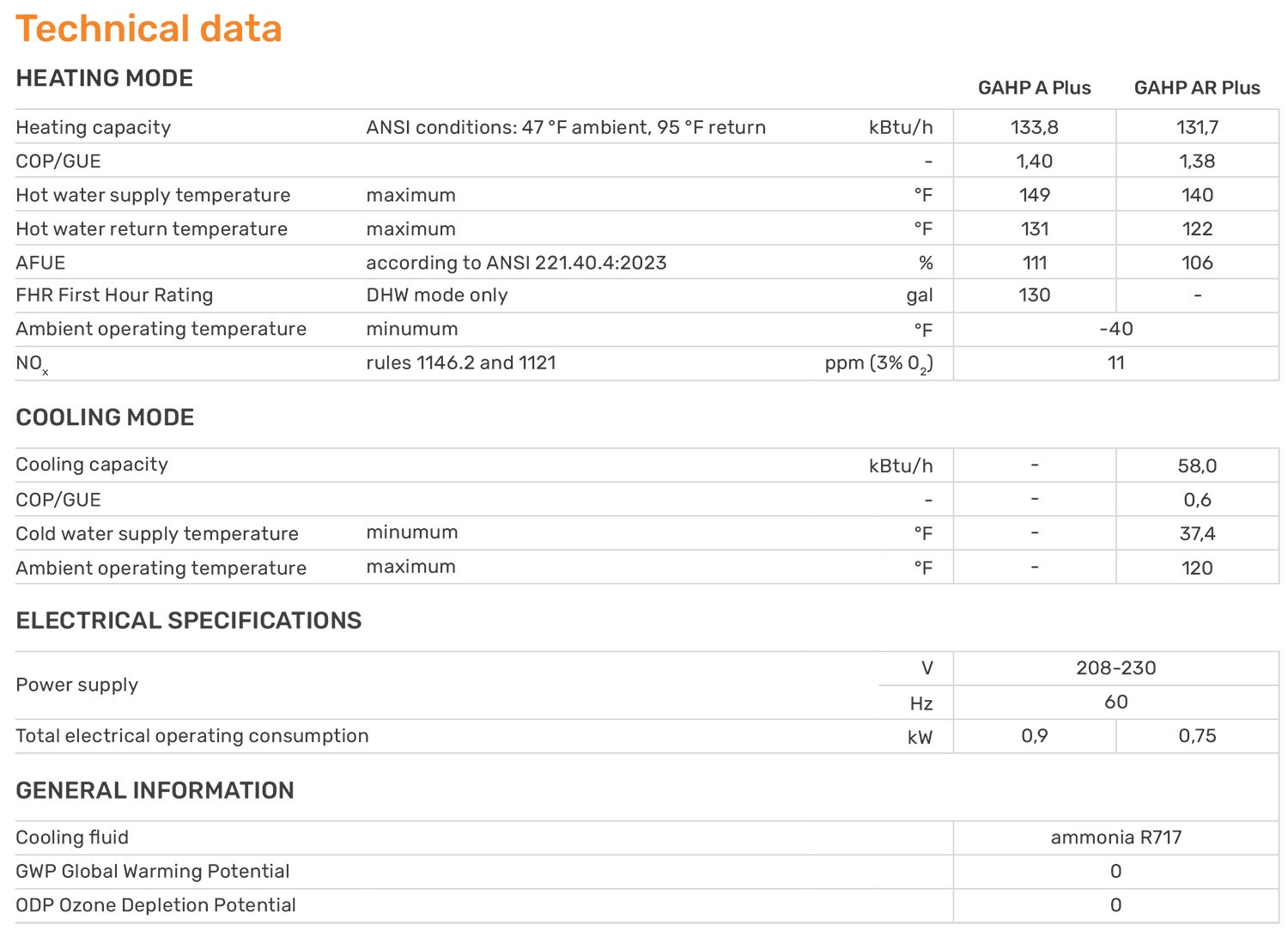
Technical table
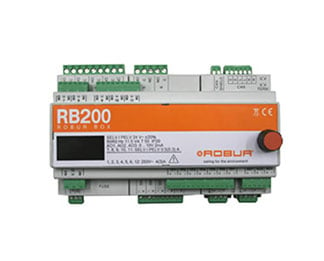
Controllers
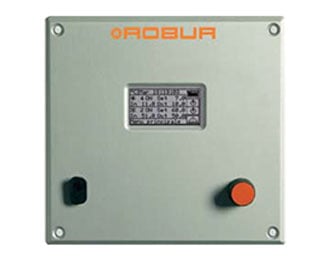
Direct Digital Control (DDC)